
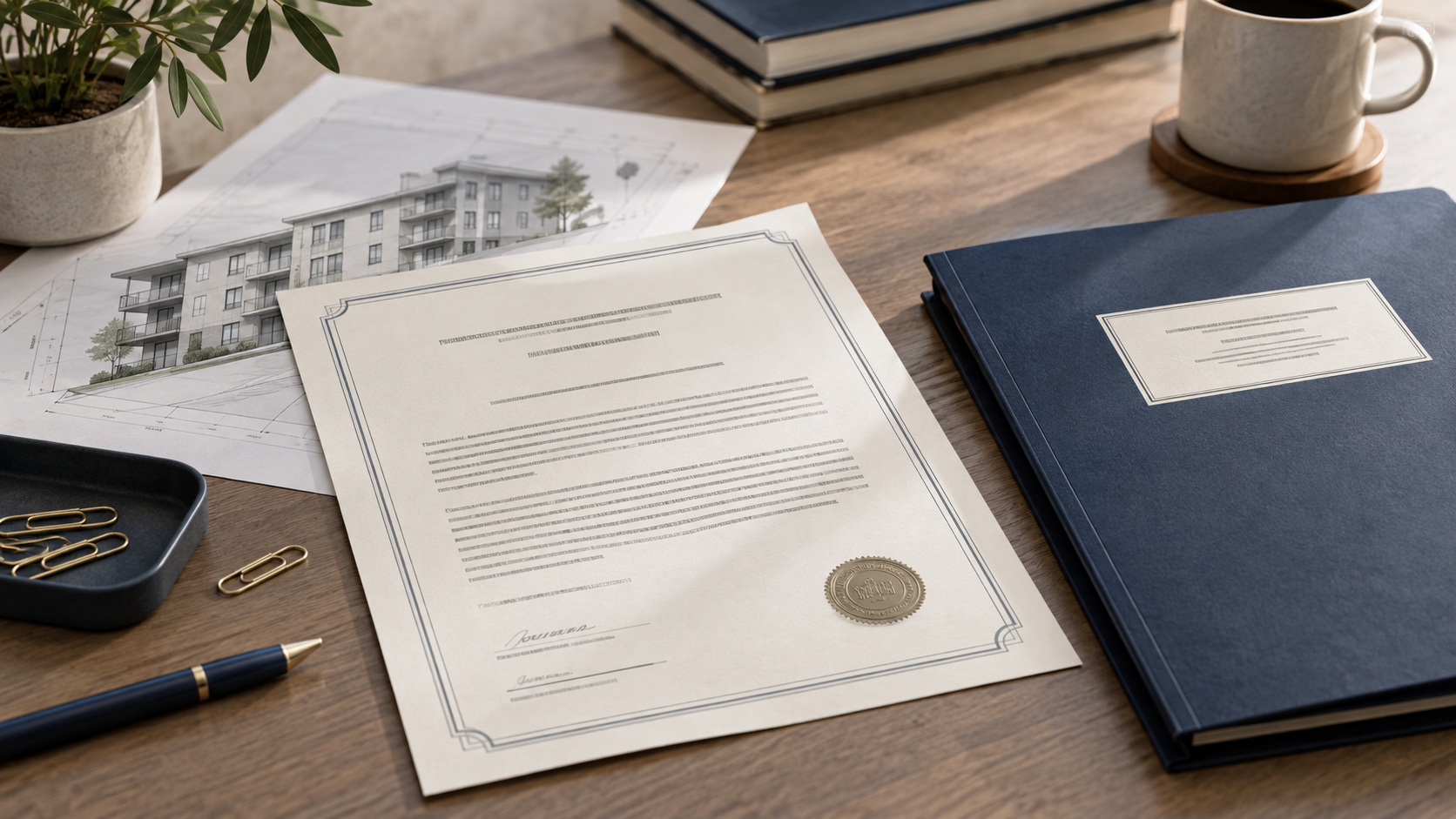
Read the request in context
Find the executed management agreement, insurance exhibit, request email, and any portal instructions before preparing a certificate. Identify the requesting entity, the property or services involved, and the deadline. A certificate request can be tied to a new owner, a revised agreement, or a new scope that needs an updated coverage discussion.
Collect the source documents
Keep the current declarations, relevant endorsement forms, exact requested wording, entity names, and prior certificate register. Match the entity name to the agreement rather than a shorthand in an email. Retain a record of who requested the document and which policy period was reviewed.
Compare contract and policy terms
Check the requested additional-insured, waiver, notice, limit, or other insurance language against the actual forms and endorsements. Do not treat a certificate as changing a policy or creating an endorsement. California law addresses certificates of insurance; use the statutory source for the general rule and the issued policy for the specific terms.
Maintain a register
Record the requester, agreement, entity, property, policy period, endorsements checked, delivery date, and next renewal action. That makes it easier to spot an old certificate being reused after the agreement changes. Policy wording, declarations, and endorsements control.
- Executed agreement and exhibit
- Correct entity and location
- Declarations and endorsements
- Certificate register and renewal date